Description
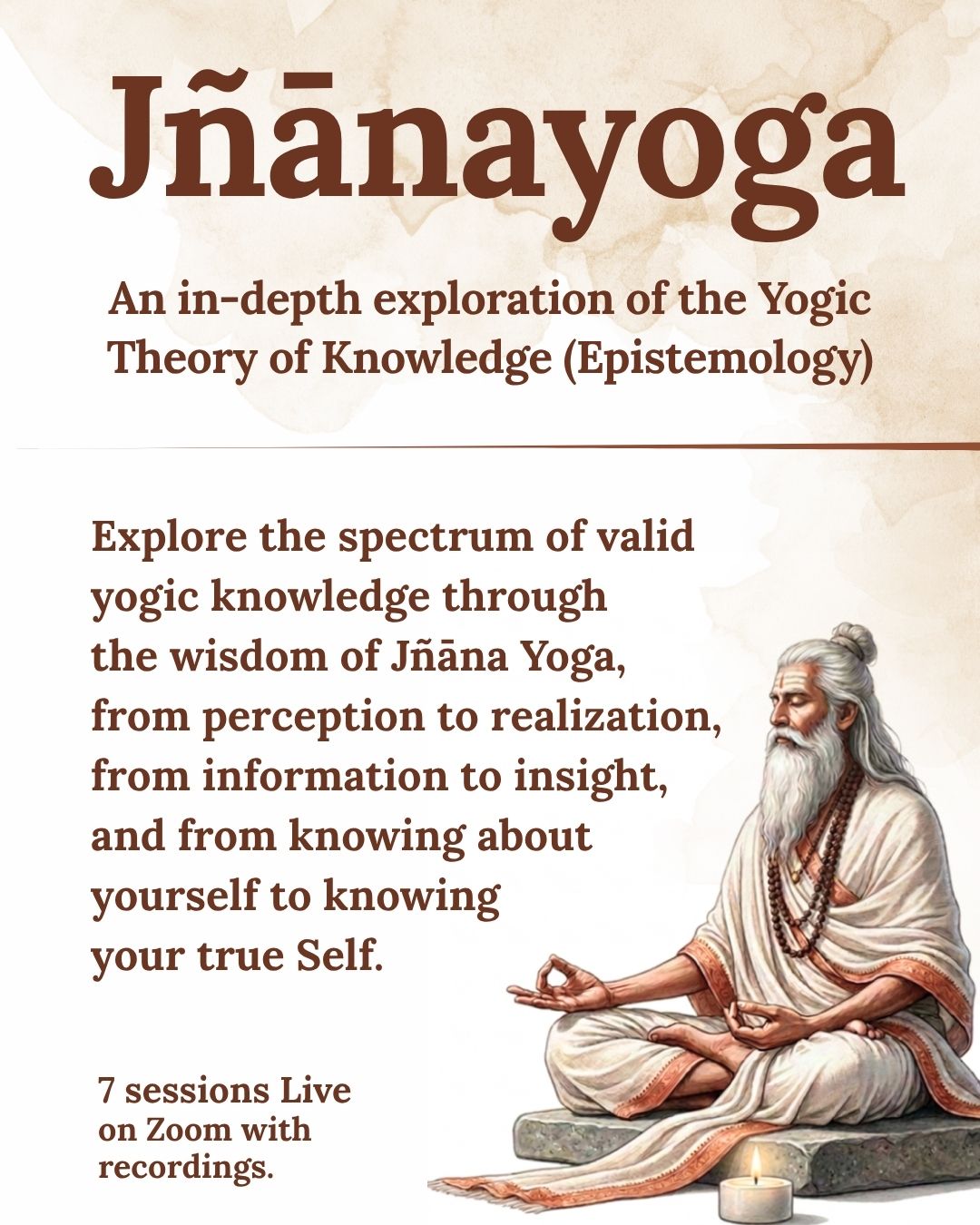
This Course is an in-depth exploration of the Yogic Theory of Knowledge (Epistemology) to explore valid yogic knowledge – from perception to realization, from information to insight, and from knowing about yourself to knowing your true Self.
The premise behind this course is that we live in an age of information overload, constantly exposed to ideas, opinions, interpretations and claims about Yoga. In such a case how do we even distinguish authentic Yogic knowledge from opinion?
Traditionally, students were taught the foundations of logic, reasoning, and discernment before studying the Yoga Sūtra. Today, these foundations are often missing from Yoga education.
This seven-session course addresses these contemporary issues through the study of Yogic theory of knowledge (epistemology) in a simple and practical way helping you discern, calm your mind, and know yourself better.
Course Content
Session 1:
-
What actually is Yogic knowledge?
-
Historical & cultural foundations of Yoga as knowledge tradition, Jnana parampara
-
Key difference between the ancient Yogic world view vs. contemporary world view
-
Why the Yogic spiritual tradition gives importance to logic & critical thinking?
Session 2:
-
Stages & dimensions of Yoga Vidya, yogic knowledge – from perception to realization
-
How does the Chitta function, and how is it different from the brain function?
-
How mental states affect levels of knowing
-
Understanding core epistemic terms like Avidya-Vidya-Buddhi-Jnana-Prajna
Session 3:
-
Means of valid knowledge, Pramana
-
Pratyaksha, sensory perception as a mode of knowledge & its Pros & Cons
-
How Kleshas distort sensory perception
-
How to critically examine our own misconceptions (Viparyaya) & mental fantasies (Vikalpa) that make us suffer
Session 4:
-
Anumana, logical inference as a mode of knowledge & its Pros & Cons
-
Traditional method of drawing accurate inference in wellness diagnosis & daily life
-
How to analyze our own limiting Vrittis like sleep (Nidra) & memory (Smriti)
-
How to use reductive logic to eliminate absurdies of an overthinking mind
*Both the above sessions take us through the topic of Vrittis from the Yoga Sutra.
Session 5:
-
Shabda, trust-worthy testimony as a mode of knowing & its Pros & Cons
-
Role of doubt (Sanshaya) in knowledge gain
-
How to use Viveka (discernment) on the path of Yoga and in Yogic study
-
Is Bhakti vs. Jnana same as blind faith vs. informed reasoning?
Session 6:
-
A look at logical fallacies (Hetvabhasa) in Indian Philosophy & how they compare with the ones in Western thought
-
Understanding metacognition in the state of dharana (mindfulness)
-
What knowledge does one gain from siddhis, the supra-sensory cognition
-
The Pros & Cons of this knowledge
Session 7:
-
What knowledge does the state of dhyana (meditation) provide?
-
What knowledge does samadhi (spiritual absorption) reveal?
-
How to apply Critical Thinking (Tarka) to calm your mind & prepare for meditation
-
How does the process of Jnana Yoga actually work, all the way till Self-realization?
Reviews
There are no reviews yet.